


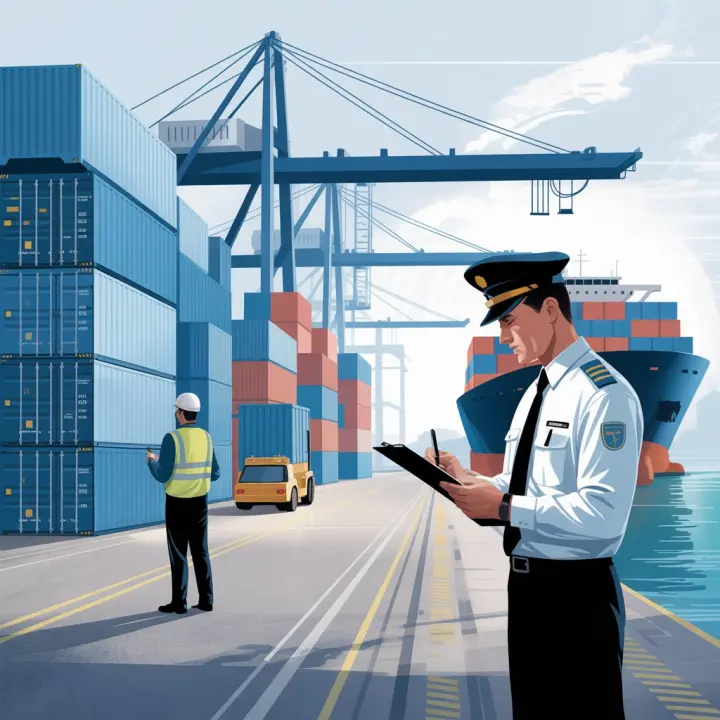
Australia to East Java import shipments require coordinated ocean freight, Indonesian customs clearance, import documentation, regulatory checks, port handling, and inland delivery. A freight forwarder can manage these stages from Sydney-origin cargo through Tanjung Perak to the consignee’s facility.
Importing commercial cargo from Australia to East Java involves more than booking a vessel from Sydney to Surabaya. The shipment must move through several connected operational stages: export preparation in Australia, ocean freight, Indonesian port handling, customs clearance, regulatory compliance, cargo release, and final delivery.
For businesses importing machinery, raw materials, spare parts, finished products, industrial equipment, or other commercial goods, weaknesses in any one of these stages can affect the entire supply chain.
A shipment may arrive at the Indonesian port on schedule but still experience delays because of incomplete documents, incorrect HS classification, missing import permits, customs valuation issues, or delivery arrangements that were not prepared before cargo release.
GF Lines provides freight forwarding and customs coordination for international import shipments, including Australia-origin cargo bound for Surabaya and other destinations across East Java.
Why Australia-to-East Java Imports Require End-to-End Coordination
A Sydney-to-East Java shipment normally involves several parties:
- Australian exporter or supplier
- Origin freight forwarder
- Shipping line or carrier
- Port and terminal operators
- Indonesian importer or consignee
- Customs broker
- Indonesian Customs and Excise
- Relevant government agencies for regulated commodities
- Trucking or inland transportation provider
- Warehouse or final receiving facility
The operational challenge is not simply moving the container between two ports. It is making sure that information, documentation, customs declarations, cargo status, and physical movement remain synchronized.
For example, a commercial importer may already have a confirmed vessel schedule from Australia while its import documentation is still incomplete. In that situation, the physical shipment may be moving correctly, but the customs process is not ready for the cargo’s arrival.
That is why an import forwarding solution should be planned around the entire shipment lifecycle, rather than treating ocean freight and customs clearance as separate activities.
Sydney to Surabaya Freight Forwarding: Understanding the Origin and Destination Nodes
For many Australia-origin shipments, Port Botany is a major operational gateway for Sydney container cargo. NSW Ports describes Port Botany as the primary container port for New South Wales, with three container terminals and dedicated on-dock rail connections.
On the Indonesian side, Surabaya provides access to East Java’s industrial and commercial distribution network through Tanjung Perak.
Port Botany
Typical logistics flow
Supplier in Australia → Sydney / Port Botany → Ocean Freight → Tanjung Perak, Surabaya → Indonesian Customs Clearance → Cargo Release → Inland Transportation → East Java Consignee
This route can be adapted depending on:
- Cargo type
- Shipment volume
- FCL or LCL requirement
- Incoterms
- Supplier location in Australia
- Final consignee location
- Customs requirements
- Import licensing
- Commodity-specific restrictions
- Delivery urgency
The final destination does not necessarily have to be Surabaya.
Cargo arriving at Tanjung Perak can be delivered to various industrial and commercial areas in East Java, including:
| Destination Area | Typical Logistics Consideration |
|---|---|
| Surabaya | Direct urban and industrial delivery |
| Sidoarjo | Manufacturing and industrial distribution |
| Gresik | Industrial, manufacturing, and project cargo |
| Pasuruan | Industrial estates and manufacturing facilities |
| Mojokerto | Industrial and manufacturing delivery |
| Kediri | Regional distribution and commercial cargo |
| Malang | Commercial, industrial, and regional delivery |
| Other East Java Areas | Route and equipment assessed based on cargo characteristics |
The correct delivery plan should be determined before customs clearance is completed so that trucking, equipment, warehouse coordination, and receiving arrangements can be prepared in advance.
FCL or LCL: Which Import Method Fits the Shipment?
The choice between FCL and LCL should not be based only on cargo volume.
It should also consider cargo characteristics, consolidation requirements, handling sensitivity, delivery schedules, and the consignee’s receiving capabilities.
| Factor | FCL | LCL |
|---|---|---|
| Cargo volume | Suitable for larger shipments | Suitable for smaller shipments |
| Container control | Dedicated container | Shared container |
| Cargo handling | Generally fewer consolidation points | Additional consolidation/deconsolidation |
| Planning | Requires container loading preparation | Requires cargo consolidation planning |
| Typical use | Machinery, bulk commercial cargo, larger inventory | Samples, smaller commercial shipments, partial loads |
| Destination handling | Container delivered for unloading | Cargo released after deconsolidation |
For industrial importers, FCL may provide operational advantages when cargo is sufficient to justify a dedicated container or when cargo handling needs to be minimized.
For smaller shipments, LCL can provide a practical alternative, provided that the consolidation and destination handling process is properly managed.
Customs Clearance Is a Commercial Process, Not Just a Documentation Step
Indonesian import customs clearance requires accurate commercial information and proper customs declaration.
The Indonesian Directorate General of Customs and Excise operates CEISA 4.0 as its integrated customs information system. The system supports customs-related processes and allows businesses to manage and monitor customs activities digitally.
The importer and its customs representative need to ensure that the shipment information is consistent across the relevant documentation.
Key information can include:
- Importer identity
- Supplier/exporter information
- Commercial invoice value
- Packing list
- Product description
- Quantity
- Gross and net weight
- Country of origin
- HS Code
- Customs value
- Incoterms
- Shipping information
- Bill of Lading details
- Import permits where applicable
- Product-specific regulatory documents
Indonesia’s official customs portal also provides references for HS Code, BTKI, customs regulations, restrictions and prohibitions, exchange rates, and other customs services.
This is why customs clearance should ideally be reviewed before the cargo departs Australia, rather than after the vessel has already arrived in Surabaya.
HS Code Classification Can Affect the Entire Import Process
One of the most important technical checks is the classification of the imported goods.
The HS Code can influence:
- Applicable import duties
- Taxes and customs treatment
- Import restrictions
- Licensing requirements
- Required supporting documents
- Product-specific regulatory requirements
- Customs valuation and declaration procedures
A vague product description such as:
“Machine parts”
may not provide sufficient information for an accurate classification review.
A better commercial description should identify the actual product, its function, material or composition where relevant, and its intended use.
For example, a machinery component should be described according to what it actually is and what it does, rather than simply being declared as “spare parts.”
Classification should be reviewed against the applicable Indonesian tariff and regulatory framework rather than assumed based solely on the supplier’s Australian classification.
Import Restrictions and Regulatory Requirements
Not every product can be imported into Indonesia under the same procedure.
Certain commodities may be subject to:
- Import licenses
- Technical approvals
- Product registration
- Health or safety requirements
- Quarantine requirements
- Mandatory standards
- Specific government approvals
- Restrictions or prohibitions
- Additional inspection
The exact requirements depend on the commodity, HS classification, importer profile, and applicable regulations.
This creates an important distinction between freight forwarding and customs compliance.
A forwarder may arrange transportation efficiently, but transportation efficiency does not automatically mean that the cargo is legally ready for import clearance.
For this reason, the shipment should undergo a pre-arrival compliance review whenever the commodity or regulatory requirements create uncertainty.
Commercial Documents Required for Australia-to-Indonesia Imports
The exact documentation depends on the commodity and shipment structure, but a standard commercial import file may include:
| Document | Operational Purpose |
|---|---|
| Commercial Invoice | Establishes commercial transaction and cargo value |
| Packing List | Details packages, dimensions, weight, and packing |
| Bill of Lading | Evidence of sea transportation and cargo details |
| Certificate of Origin | Supports origin documentation where required |
| Purchase Order | Supports transaction verification |
| Import License / Permit | Required for regulated commodities where applicable |
| Technical Documents | May support product identification or regulatory review |
| Insurance Document | Relevant when cargo insurance applies |
| Other Supporting Documents | Determined by commodity and customs requirements |
The most important principle is consistency.
Product descriptions, quantities, weights, values, and other shipment information should not contradict one another across the documents.
Differences between invoice, packing list, Bill of Lading, and customs declaration can create questions during the clearance process.
Incoterms Change Who Controls the Import Process
The selected Incoterm should be understood before the shipment is booked.
For example:
FOB
Under FOB, the buyer generally takes responsibility for the main international transportation after the goods are loaded according to the agreed terms.
The Indonesian importer therefore needs a forwarder capable of coordinating the international freight and destination processes.
CIF
Under CIF, the seller arranges carriage and insurance to the named destination port under the applicable Incoterms rules.
However, the Indonesian importer still needs to manage the import-side customs and destination obligations that are allocated to the buyer.
DAP
Under DAP, the seller arranges transportation to the named destination, while import clearance and import-related obligations generally remain with the buyer unless otherwise agreed.
DDP
DDP places significantly more delivery responsibility on the seller, including import clearance and duties under the applicable Incoterms framework.
The practical lesson is simple:
Do not select an Incoterm based only on the freight quotation.
The importer should understand who is responsible for:
- Origin handling
- Ocean freight
- Insurance
- Import customs clearance
- Duties and taxes
- Destination charges
- Inland transportation
- Final delivery
A mismatch between the commercial agreement and the actual logistics arrangement can create operational disputes later.
Australia to East Java Import Customs Clearance Workflow
A professional shipment should be managed through a defined sequence.
1. Shipment and Commodity Assessment
The importer provides the shipment information:
- Supplier location
- Cargo description
- Quantity
- Weight and dimensions
- Estimated cargo value
- HS Code if available
- Preferred Incoterm
- Origin location
- Destination in East Java
- Required delivery date
The forwarder can then determine the appropriate logistics structure.
2. Pre-Import Document Review
Before departure, the available documents should be checked for:
- Product description
- Commercial value
- Quantity
- Weight
- Packaging
- HS classification
- Import restrictions
- Required permits
- Consignee information
This stage is particularly valuable for new importers or unfamiliar commodities.
3. Origin Cargo Preparation
The Australian supplier prepares the cargo according to the agreed shipping instructions.
Depending on the shipment:
- FCL cargo is loaded into a dedicated container.
- LCL cargo is delivered to the appointed consolidation facility.
- Special cargo may require additional handling instructions.
- Oversized or project cargo may require separate equipment planning.
4. Export and Ocean Freight Coordination
The shipment is coordinated with the shipping line and origin-side logistics partners.
Port Botany operates multiple container terminals and has dedicated on-dock rail infrastructure supporting its container logistics network.
The operational objective is to ensure that cargo, shipping instructions, documentation, and vessel schedules remain aligned.
5. Pre-Arrival Customs Preparation
While the cargo is in transit, the Indonesian customs clearance file should be prepared.
This can include:
- Commercial invoice
- Packing list
- Bill of Lading
- Importer information
- HS Code
- Supporting permits
- Regulatory documents
- Other customs declarations and supporting information
Preparing the file before arrival reduces the risk of treating customs clearance as a last-minute task.
6. Arrival at Tanjung Perak
The vessel arrives at Surabaya’s Tanjung Perak port.
Pelabuhan Tanjung Perak
The port is located at Jl. Perak Timur 610, Surabaya, and forms an important logistics node for cargo entering East Java.
At this stage, coordination between the carrier, terminal, customs broker, importer, and delivery provider becomes important.
7. Customs Clearance
The customs representative handles the applicable import declaration and coordinates the customs process.
Depending on the shipment, Customs may:
- Process the declaration
- Review submitted information
- Request supporting documents
- Conduct document examination
- Conduct physical inspection where applicable
- Assess customs obligations
- Issue the relevant release decision
The precise process depends on the cargo and applicable customs procedures.
8. Cargo Release and Port Handling
Once the required customs and operational conditions have been fulfilled, cargo can proceed through the applicable release process.
At this stage, the forwarder coordinates:
- Terminal handling
- Container release
- Truck appointment
- Equipment
- Delivery schedule
- Warehouse or consignee receiving requirements
9. Inland Delivery Across East Java
The final transportation plan depends on:
- Consignee location
- Container size
- Cargo weight
- Cargo dimensions
- Road accessibility
- Delivery window
- Unloading equipment
- Special handling requirements
For industrial locations, the delivery plan should account for site access and unloading arrangements rather than simply calculating the distance from Surabaya.
10. Final Delivery and Proof of Receipt
The shipment is delivered to the consignee’s facility.
The logistics process is completed after the cargo is received and the relevant delivery documentation is confirmed.
What Can Cause Delays in Australia-to-East Java Imports?
Import delays do not always originate at the port.
Common causes include:
Incomplete Commercial Documents
Missing or inconsistent invoices, packing lists, or shipping documents can delay customs preparation.
Incorrect Product Description
A description that is too general can complicate classification and customs review.
HS Code Issues
Incorrect classification can affect duty treatment and regulatory requirements.
Missing Import Permits
Regulated commodities may require additional approvals before they can be cleared.
Customs Value Discrepancies
Differences between commercial documents and declared customs information can trigger additional review.
Unprepared Delivery Arrangements
A container may be ready for release while the consignee has no confirmed truck, unloading slot, or warehouse capacity.
Demurrage, Detention, and Storage Exposure
The importer should understand the applicable free-time conditions and destination handling rules before the cargo arrives.
These charges can arise from different operational stages, so they should not be treated as one generic “port cost.”
Managing the Final Delivery to Surabaya, Sidoarjo, Gresik, and Other East Java Areas
East Java import delivery should be planned around the actual consignee location.
For example, delivering industrial cargo to Gresik may require a different trucking and receiving plan from delivering a palletized shipment to central Surabaya.
A proper delivery assessment should consider:
- Container type
- Cargo dimensions
- Gross weight
- Truck suitability
- Delivery address
- Road access
- Loading/unloading facilities
- Receiving hours
- Warehouse capacity
- Site restrictions
- Delivery appointment
For machinery or industrial equipment, the delivery plan may also require:
- Flatbed or specialized trucks
- Forklift
- Crane
- Tail lift
- Side loader
- Additional manpower
- Site coordination
This is where end user delivery East Java import becomes different from ordinary parcel delivery.
The objective is not simply to bring the cargo to the city. The objective is to deliver the shipment safely and operationally ready to the actual receiving location.
GF Lines Operational Insight
For Australia-to-East Java shipments, the most effective approach is to connect freight planning, customs preparation, and final delivery planning before the cargo departs Australia.
A common operational mistake is to arrange ocean freight first and only discuss customs and delivery after the vessel is already approaching Surabaya.
That reverses the proper sequence.
A better approach is:
Commodity → HS classification → Import requirements → Documents → Incoterm → Freight mode → Port → Customs → Delivery
This sequence allows potential issues to be identified before they become port delays.
GF Lines approaches import shipments as an integrated logistics process rather than treating customs clearance as an isolated administrative service.
With more than 10 years of operational experience in customs clearance and international logistics, the team can assist importers in reviewing shipment requirements, coordinating freight, preparing customs documentation, and arranging delivery to the final destination.
Free consultation is available for businesses planning Australia-to-East Java imports.
When Should You Contact a Freight Forwarder?
Ideally, before the supplier starts preparing the shipment.
Early coordination gives the logistics team time to review:
- Commodity information
- HS Code
- Import restrictions
- Required permits
- Incoterms
- Origin handling
- FCL/LCL requirements
- Ocean freight schedule
- Customs documentation
- Final delivery requirements
This is particularly important for first-time importers, regulated products, machinery, industrial components, and shipments with strict delivery deadlines.
Australia to East Java Import Service by GF Lines
GF Lines can coordinate the logistics process for commercial shipments from Australia to East Java, including:
- International sea freight
- FCL and LCL shipments
- Freight forwarding
- Import customs clearance
- Customs documentation coordination
- Port handling
- Cargo release coordination
- Inland transportation
- Warehouse delivery
- End-user delivery
- Shipment coordination with suppliers and consignees
The service can be structured according to the actual shipment requirement rather than forcing every importer into the same logistics model.
Whether the cargo is destined for Surabaya, Sidoarjo, Gresik, Pasuruan, Mojokerto, Malang, Kediri, or another East Java location, the delivery plan should be developed around the cargo and receiving site.
Frequently Asked Questions
How long does Australia to East Java import customs clearance take?
The customs clearance timeline depends on the commodity, completeness of documentation, HS classification, applicable import requirements, customs examination, and whether additional permits or inspections are required. A pre-arrival document review can help reduce avoidable delays.
Can GF Lines handle Sydney to Surabaya freight forwarding and customs clearance?
Yes. GF Lines can coordinate international freight, import customs clearance, port handling, cargo release, and inland delivery for commercial shipments from Australia to Surabaya and other East Java destinations.
What documents are normally required for importing goods from Australia to Indonesia?
Common documents include the commercial invoice, packing list, Bill of Lading, importer information, and supporting permits or certificates where applicable. The exact requirements depend on the commodity and Indonesian import regulations.
Should HS Code be checked before the shipment leaves Australia?
Yes. Reviewing the HS classification before shipment is preferable because classification can affect customs treatment, duties, import restrictions, and supporting documentation requirements.
Can imported cargo be delivered directly from Tanjung Perak to the end user’s facility in East Java?
Yes. Depending on the shipment structure, customs status, cargo characteristics, and delivery requirements, the shipment can be coordinated from Tanjung Perak through inland transportation to the consignee or end user’s facility.
Plan Your Australia-to-East Java Import Shipment
If you are sourcing goods from Australia and need a coordinated solution for Sydney to Surabaya freight forwarding, Indonesian customs clearance, and end-user delivery across East Java, GF Lines can help review the shipment requirements before departure.
Send the following information for an initial assessment:
- Cargo description
- Quantity
- Weight and dimensions
- Estimated cargo value
- Supplier location in Australia
- Destination in East Java
- Preferred Incoterm
- FCL or LCL requirement, if known
- Target shipment date
GF Lines — International Freight Forwarding, Customs Clearance & Logistics
WhatsApp: 6285199110760
Baca juga: